

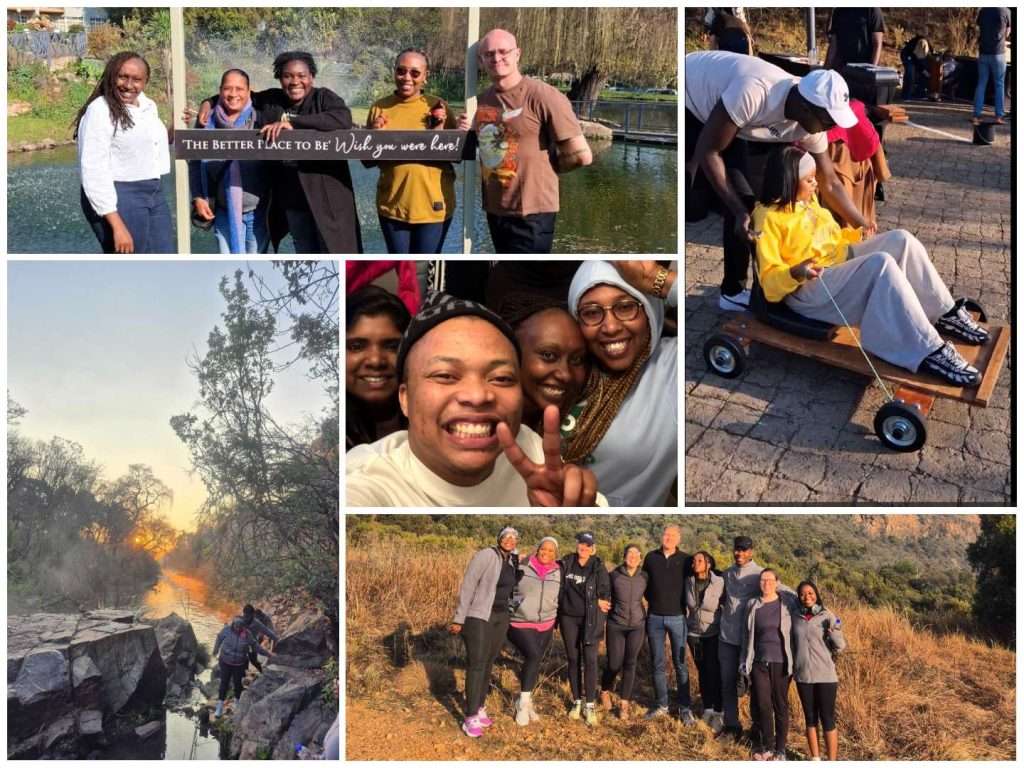
Executive Communities’ two-day teambuilding experience built perspective, batmobiles and a five-year vision.
In June, all 30 employees of Executive Communities attended a teambuilding event at Glenburn Lodge, a comfortable 45-minute drive from the Johannesburg headquarters. With employees and directors based in Portugal, Durban, Cape Town, Hoedspruit, Belgium and Nairobi, this was a rare opportunity to have everyone in the same space, to focus on the concept of “one Executive Communities”.
The getaway was structured around a variety of interactive exercises, with different groups of team members working together. “We called it the Superpower Sessions, and we focused on analysing our identity and our future strategy. Day one involved identifying the ‘secret sauce’ that makes the organisation unique, while day two focused on applying these strengths to determine a five-year vision for 2031,” says Joel Roerig, Executive Communities MD.
This, he says, is underpinned by the “one Executive Communities” approach. “That means while we are sensitive to regional differences, at the same time we do want to make sure we keep using the same secret sauce, and express that in the different regions.”
For Executive Communities, that meant reinforcing its no-nonsense culture and peer-level executive engagement model over the two-day event and beyond, into a full week of additional face-to-face engagements in Johannesburg and training sessions for colleagues visiting from international locations.
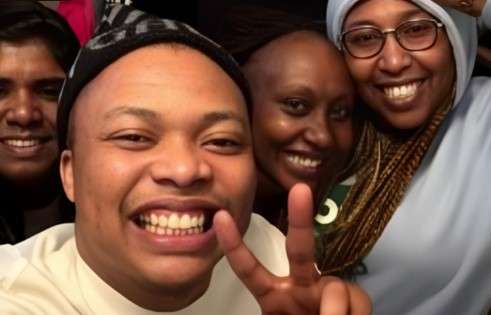
Storytelling, imagineering – and go-karts
What does Executive Communities do better than anyone else does?
“We provide a neutral space, an opportunity,” says Joel. “The nature of our work means we need to be well-informed and switched on, and it’s crucial that we know our communities and support them. We do this by being down-to-earth and world-class at the same time. We are can-do and enthusiastic; we are professional but not formal. We constantly innovate and reinvent. We’re always thinking about the next big thing. We’re a small company, so we are agile and responsive. We are quick on our feet. We get things done.”
He says that the biggest revelation of the weekend came from seeing how completely attuned the team is to the company’s vision. “It was wonderful to see how everyone understood how uniquely community-focused we are, and how deeply everyone understood who we are and what we do.”
Towards the end of day one, the team participated in a “Build your own Batmobile” activity, where they constructed go-karts within a strict two-hour time limit. The exercise allowed engineering-minded staff to handle construction, while creative team members managed the aesthetic design – and the competitive athletes raced the vehicles. Director Melle Eijckelhoff’s competitive streak showed as he exhorted everyone to take the project as seriously as any piece of work in the real world – and Executive Communities staff threw themselves into the project with glee.
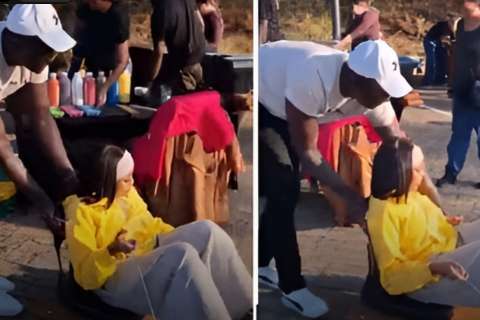
“It was a beautiful end to the day,” says Joel. “Imagine the setting sun in the middle of winter, and us racing these cars along a field with long shadows and golden light. Everyone had an absolute ball.”
Five years from now, storytelling, and a four-day work week
After the team members demonstrated their superior and nuanced understanding of the work Executive Communities does, it was time to gaze into the future. Using what makes Executive Communities unique and what does the future look like as a starting point, the team was asked: “What do we want to become?”
Executive Communities has exceptional writers on its team – it’s basically a prerequisite – so when everybody engaged in a storytelling exercise to envision itself in 2031, asking themselves the question: “What does our best week look like, five years from now?”, the results were predictably impressive.
Participants produced creative scenarios ranging from hosting events in Addis Ababa to the moon, among many other inspirational ideas that may soon become reality. The team used “dot voting” to identify the most resonant aspects of their proposed future – with a notable interest in moving towards a four-day work week!
The second day included a game drive at the Lion and Rhino Park, which the Kenyan cohort of the team experienced as underwhelming when compared to the Maasai Mara…
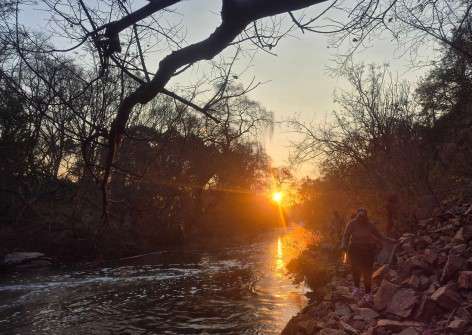
Someone who travels between Eastern and South Africa regularly is East Africa director KC Rottok Chesaina, who, on a serious note, says, “It was great for the East African cohort to join the South Africans and get to share ideas and discuss different and innovative ways we do things in the different regions. It’s an extremely valuable experience.”
The event closed with a chesanyama round the fire on the final night, but the Kenyans were not to be outdone, teaching the others that “chesanyama” is simply the South African version of “nyama choma” in Kenya. Whatever you call it, the food was delicious, and the vibes at the resort’s pool house, aided by some pumping tunes, made for fun that lasted into the wee hours.
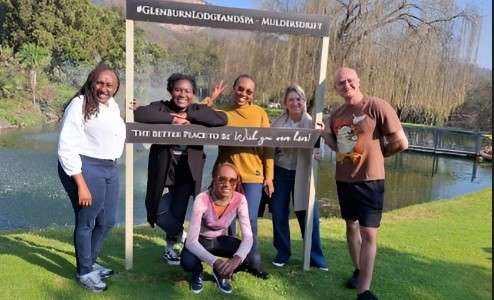
"Yes, we had fun, but we locked in and worked hard, and we know where we are going,” says Joel. KC agrees, but suggests: “The Kenyan team can’t wait to host the South Africa team in Kenya at the next team strategy session!”
Wherever that is to be, it will be hard to beat this year’s event!