

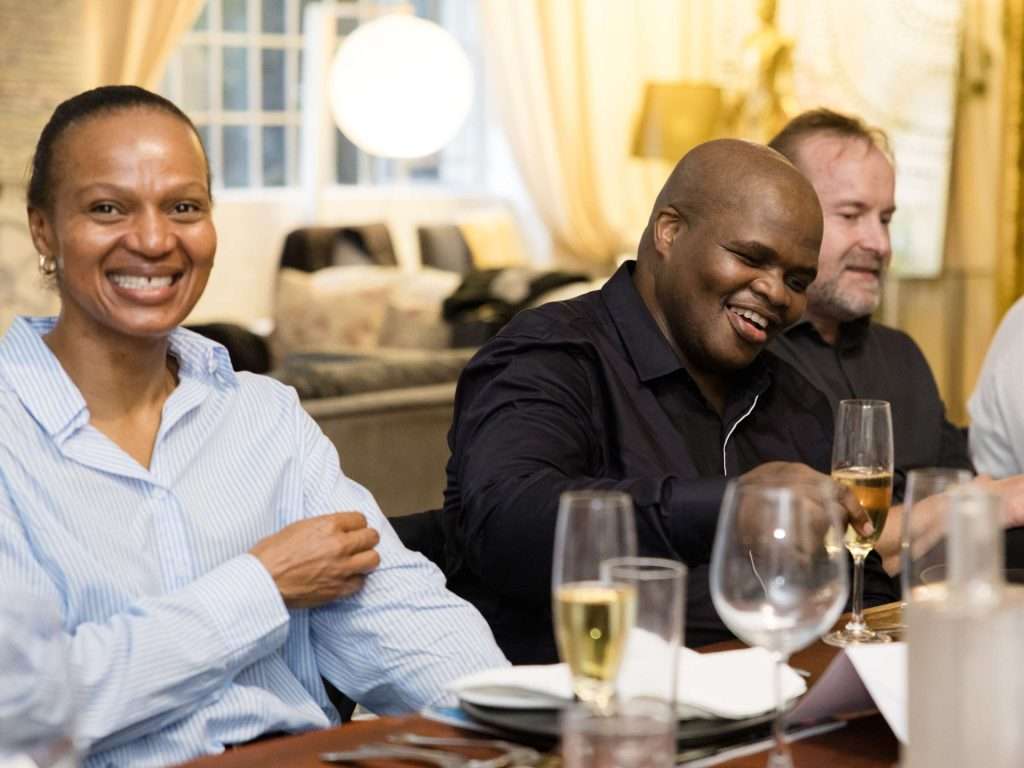
Three events this month in the Mother City were brim-full of mind-broadening creative thinking and innovative solutions as executives tackled prickly problems in their industries.
It was Cape Town’s turn to host three Executive Communities networking dinners in late February. Finance, HR, and IT executives participated in three networking and discussion events – and the fine dining was the cherry on top!
CIO Dinner
The exclusive, bespoke and secrecy-shrouded Chef’s Table restaurant was the venue for the CIO’s intimate roundtable Ton 24 February. The subject? Building and leading intelligent teams – and here’s the catch – in the context of AI and automation, surely the biggest game-changer in recent IT history.
Supported by CIO South Africa’s principal partner Entelect, the evening was ripe for candid discussion, and began with the elephant in the room – artificial intelligence.
How do you eat an elephant? One bite at a time, as the old joke goes, which in this context meant moving from a fear of AI to mastery of it, by confronting it calmly and developing mastery over its usage.
One IT leader offered a practical approach his organisation had taken: “We invited people in the business to become AI students. More than 50 team members signed up. Now they are evangelists advocating for use cases that improve efficiencies in their different departments.”
The executives cautioned, however, against the compulsion to use IT for its own sake, when existing tools functioned well, because, especially in times of economic hardship, budgets were under pressure.
There was agreement that data standardisation was crucial in the IT world. Without consistent and reliable data, intelligent workflows remain out of reach. “In my experience, data standardisation is essential for AI adoption. If your data is standardised, you will get similar results from different models,” one CIO shared.
Another CIO’s plea for valuing social and emotional intelligence rounded off the evening. She said, “Intelligent teams are not just about being tech-savvy and innovative. It’s about social and emotional intelligence first. In my previous role, we partnered with HR to develop strength profiles for the IT team and identify how to energise them. I think this is the beginning of building an intelligent team.” From that foundation, IT leaders can drive culture shifts and champion innovation.
CFO Dinner
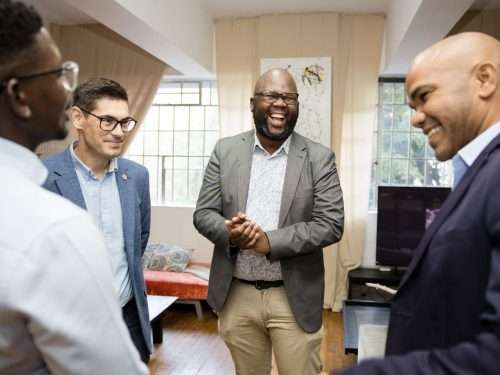
The renowned Chef’s Table was again the exclusive venue for the gathering of finance heavyweights from several industries on 25 February. It was an appropriate setting for these C-suite executives to grapple with how unprecedented recent geopolitical shifts shape local financial outcomes.
The global outlook is in a state of flux, with some analysts prophesying the end of the rules-based international order. A belligerent US, characterised by an appetite for wars and punitive tariffs, has a spill-over effect in South Africa. “It also showed us that over-reliance on international funding is not sustainable,” one CFO said.
CFOs also expressed concerns around national and local municipal management in provinces and metros around South Africa. A national water crisis and crumbling infrastructure were high on the list of concerns. Specific to Cape Town, a retail market affected by Covid, high personal income taxes, Airbnb, and foreign land ownership in a land-scarce context were mentioned.
However, attendees agreed with the perception that South Africans are resilient and innovative, with high degrees of openness and creative problem-solving abilities, and that this could mitigate against some problems caused by global shifts. They were adamant that finance is a long game. “We can’t have knee-jerk reactions to the noise and political showdowns. This is not T20 cricket,” one executive joked.
The CFOs also noted that pillars of democracy existed both in South Africa and in the US and elsewhere. “In the short term it creates massive volatility and political theatre, but in the long term there is still that piece of democracy that remains reliable,” another CFO said.
Another positive that government had begun taking business into its confidence, which has led to better functioning at SOEs with historic legacy challenges over the past three years. As for planning in contexts of uncertainty, the sentiment was unanimous: finance is a long-term game, and forecasting for the future requires training young people, staying informed on regulation, and embracing technology.
CHRO Dinner
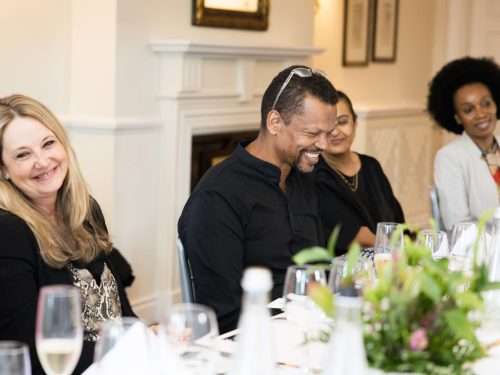
Not to be outdone, the next day, 26 February, chief human resources executives dined in style at the classic Mount Nelson Hotel – and issues such as unemployment, skills shortages, mentoring, and education and employability disconnect were on the menu.
The executives discussed the skills gap, especially but not limited to new entrants into the job market, who are often the victims of outdated curricula at universities or TVET colleges. They may arrive with the technical skills intact but lack what one CHRO called “the soft skills, grit and communication, that are not reflected in the curriculum”.
This problem occurs, not only at the entry level, but also higher up, as the global commercial landscape evolves at an unprecedented pace – necessitating reskilling at all levels, and developing talent from inside.
Turning an oft-heard lament on its head, one executive suggested that, instead of being only, or mainly, “consumers of talent”, HR leaders could become “therapists of talent”. “We have to be developers, not just consumers all the time,” she said. Early-career mentoring is invaluable in this regard, as is touching base with higher education institutions to align needs and courses.
Another leader detailed a structured university-facing initiative aimed at lessening the contrast between the lecture hall and the office floor. “We created a year-long programme with a detailed schedule and opened it up to university students. The aim is to expose students to what our workplace is like, because when they come out of university it can be quite a shock.”
For one night, an elegant room in an evergreen restaurant held HR leaders full of empathy, willing to demonstrate flexibility, interrogate their own paradigms, and admit that while the system is complex, their influence is significant. As one executive put it, “While it is not entirely up to us, we have a huge role to play. I think it’s important that we don’t underestimate the influence that we have.”
The events in Cape Town once again underscored the benefits of having the CFO, CHRO, and CIO professions’ leading brains in the same room, connecting and sparking solutions. There will be another opportunity to participate in the thought leadership generated by networking events such as these at three Cape Town summits in April, hosted by Executive Communities. We would love to see you there.
If you are a CFO, CHRO, or CIO who would like to attend the Cape Town summits in April, please contact Executive Communities head of communities Sungula Nkabinde on [email protected].