

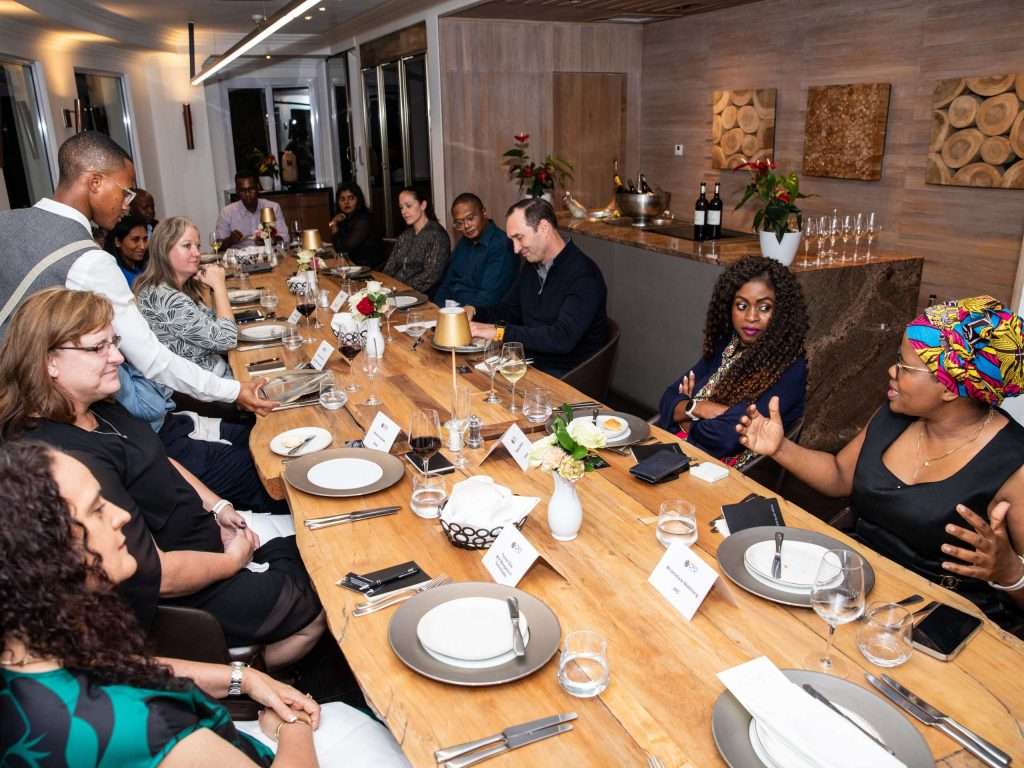
CFO South Africa, CHRO South Africa and CIO South Africa hosted three dinners in Johannesburg, where executives had the opportunity to tackle the biggest issues facing their businesses.
Sometimes Executive Communities hosts big ticket events with hundreds of executives, with mega learning and networking opportunities, and others, the events are smaller, allowing for greater engagement and depth to the discussions. Three executive dinners hosted in March, one by CFO South Africa, one by CHRO South Africa, and one by CIO South Africa, were a great expression of this type of event, with the three executive types to exchange ideas and interrogate the pertinent questions of their times with their peers.
CFOs tackle acquisitions, decision making and unmeasurables
For the CFOs who gathered at The Westcliff’s Cellar Door on 19 March, it wasn’t only the food that they got their teeth into. The executives at this dinner, supported by Marsh, also got stuck into honest and revelatory discussions around topics such as:
- The risks inherent in acquisitions, where the financial outcomes will, by definition, only become clear in the future – and, related, the ability to pivot to Plan B where necessary, or admit to mistakes where they have occurred, and apply fixes;
- The danger of “analysis paralysis” arresting decision-making, especially among CFOs, a breed of person who seeks detail and certainty; and
- The value of the “unmeasurables”: guarding company culture, retaining staff morale boosters such as opportunities to socialise over events or meals, and celebrating wins were disproportionately important compared to the size of the entry of these on the balance sheet.
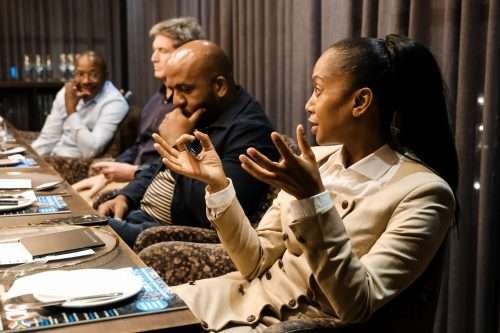
CIOs delve into AI and inherent costs
Across town, at the esteemed Aurum in Sandton, senior IT leaders were likewise tucking in. On the menu at this dinner, delivered in partnership with MagicOrange, was, of course, the hottest topic of the information technology space: artificial intelligence, and its potential to disrupt. But this was no meeting of hotheads…
The mood was cautionary, as the executives discussed money, money, money. Information technology is a cost centre, as all IT leaders know, “and that means constantly justifying its existence by demonstrating value,” as one attendee said. It’s crucial that CIOs understand the business thoroughly, and then take decisions about expenses based on what the business needs rather than on technological novelty for its own sake, CIOs agreed.
Collapsing silos was a refrain. Deep knowledge of a business’ needs can best guide decisions on tech solutions – especially, as one attendee observed, early in the AI adoption cycle, which is beset with unknowns.
AI tends to support automation and workplace automation internally, and value-delivering solutions in the customer-facing sphere. The latter must contribute to the bottom line, or be reconsidered for use, the CIOs stressed. The creation of AI tools is expensive if the business wants proprietary, self-built solutions, and their maintenance is expensive, because they are energy-hungry, both in terms of electricity consumption and cooling needs. A rallying cry for calm heads was uttered in unison.
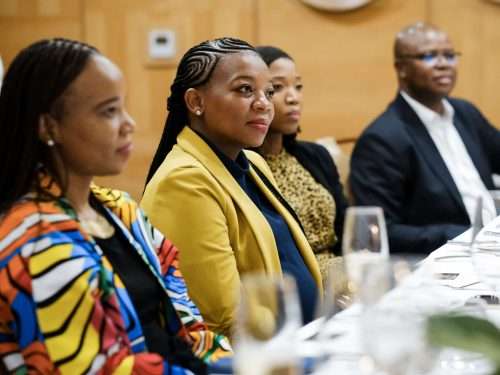
CHROs balance financial health and empathy
On the same night, Jozi’s HR leaders were dining at the delectable Saxon Hotel, at a dinner supported by Old Mutual Corporate. The topic of financial discipline also haunted this group, who spent time debating the opposing forces of empathy (a touchstone of the HR profession) and financial constraints, a topic that became the quiet undercurrent of the evening.
The HR execs grappled with the need to “hold the line” for the financial health of the company while wishing to care for employees in need. “We want to support people, but at the same time we still have to hold them accountable. And sometimes those two things are in direct conflict with each other,” one CHRO said.
That distinction between individual experience and organisational design continued to be explored throughout dinner. “I’ve seen people who are genuinely stressed, but it’s also because of not having the right people in the right roles or the right environment,” another exec observed.
One HR leader pointed to the tension between figuring out “is this a well-being issue or is this something in the system that we haven’t fixed?” when employees are struggling.
“The sad part is that people are resorting to financial behaviours that put them at risk,” another attendee shared. “And it affects the family and dependents.”
Another added, “Financial wellness can’t be an event. If you start talking to someone three months before retirement, it’s too late. These conversations have to be ongoing, and they have to start much earlier in a person’s career.”
The HR leaders were of one mind that wellness, intertwined with financial reality, cannot be addressed in isolation, and that meaningful change lies in understanding how deeply connected these experiences are.
The Executive Communities dinners were high-level, humbling events in all three of their iterations. In a world may be full of uncertainty, with this calibre of executives at these events, it’s clear the business world is in good hands.
If you are an executive missing out on invitations to these exclusive events, contact head of communities Sungula Nkabinde on [email protected], and if you are a partner who would like to support these outstanding networking opportunities, contact head of sales Nick Smith on [email protected].